# Neo4j快速入门
Neo4j 官方提供了三个版本:Neo4j Community Edition, Neo4j Enterprise Edition, Neo4j Desktop
在云服务器上部署 Neo4j 预装包之后,请参考下面的步骤快速入门。
### 准备[](https://support.websoft9.com/docs/neo4j#%E5%87%86%E5%A4%87)
部署 创达睿通 提供的 Neo4j 之后,需完成如下的准备工作:
1. 在云控制台获取您的 **服务器公网IP地址**
2. 在云控制台安全组中,确保 **Inbound(入)规则** 下的 TCP:**80 和 7687** 端口已经开启
3. 在服务器中查看 Neo4j 的 **默认账号和密码**
4. 若想用域名访问 Neo4j,务必先完成 **域名五步设置** 过程
### Neo4j 初始化向导[](https://support.websoft9.com/docs/neo4j#neo4j-%E5%88%9D%E5%A7%8B%E5%8C%96%E5%90%91%E5%AF%BC)
#### 详细步骤[](https://support.websoft9.com/docs/neo4j#%E8%AF%A6%E7%BB%86%E6%AD%A5%E9%AA%A4)
1. 使用 **SSH** 客户端连接 Neo4j 所在的服务器,输入 `cypher-shell` 命令,并登录
```
$cypher-shell
username: neo4j
password: *****
Connected to Neo4j 4.1.0 at neo4j://localhost:7687 as user neo4j.
Type :help for a list of available commands or :exit to exit the shell.
Note that Cypher queries must end with a semicolon.
neo4j@neo4j>
```
2. 输入命令 `CALL dbms.showCurrentUser();` 查看当前用户
```
neo4j@neo4j> CALL dbms.showCurrentUser();
+--------------------------+
| username | roles | flags |
+--------------------------+
| "neo4j" | admin | [] |
+--------------------------+
1 row available after 22 ms, consumed after another 1 ms
```
3. 体验图形化管理工具 Neo4j Browser
> 官方文档:[Neo4j Documentation](https://neo4j.com/docs/)
#### 出现问题?[](https://support.websoft9.com/docs/neo4j#%E5%87%BA%E7%8E%B0%E9%97%AE%E9%A2%98)
若碰到问题,请第一时刻联系 **技术支持**。也可以先参考下面列出的问题定位或 **FAQ** 尝试快速解决问题:
**能够访问 Neo4j Browser,但是连接数据库报错?**
您的服务器对应的安全组 7687 端口没有开启(入规则),导致无法连接数据库
**为什么 Neo4j Browser 中 Roles 显示为空?**
Neo4j 社区版不支持 Roles,故显示为空
### Neo4j 入门向导[](https://support.websoft9.com/docs/neo4j#neo4j-%E5%85%A5%E9%97%A8%E5%90%91%E5%AF%BC)
下面以 **分析电影数据** 作为一个任务,帮助用户快速入门:
**用范例数据分析**[****](https://support.websoft9.com/docs/neo4j#%E7%94%A8%E8%8C%83%E4%BE%8B%E6%95%B0%E6%8D%AE%E5%88%86%E6%9E%90)
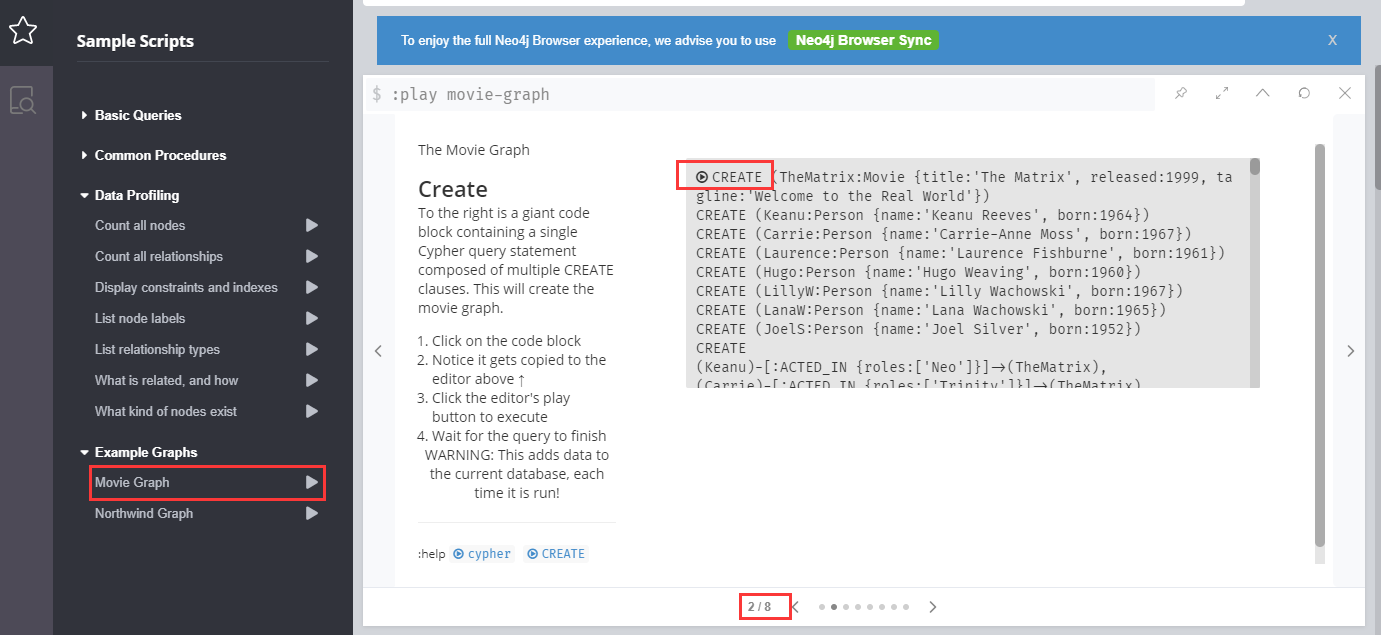
控制台提供了一个经典范例 **Movie Graph**,根据范例提供的向导可以完成如下动作:
* 创建:将电影数据插入图形
* 查找:检索单个电影和演员
* 查询:发现相关的演员和导演
* 解决:分析某个演员的**六度空间**关系
1. 登录 Neo4j Browser
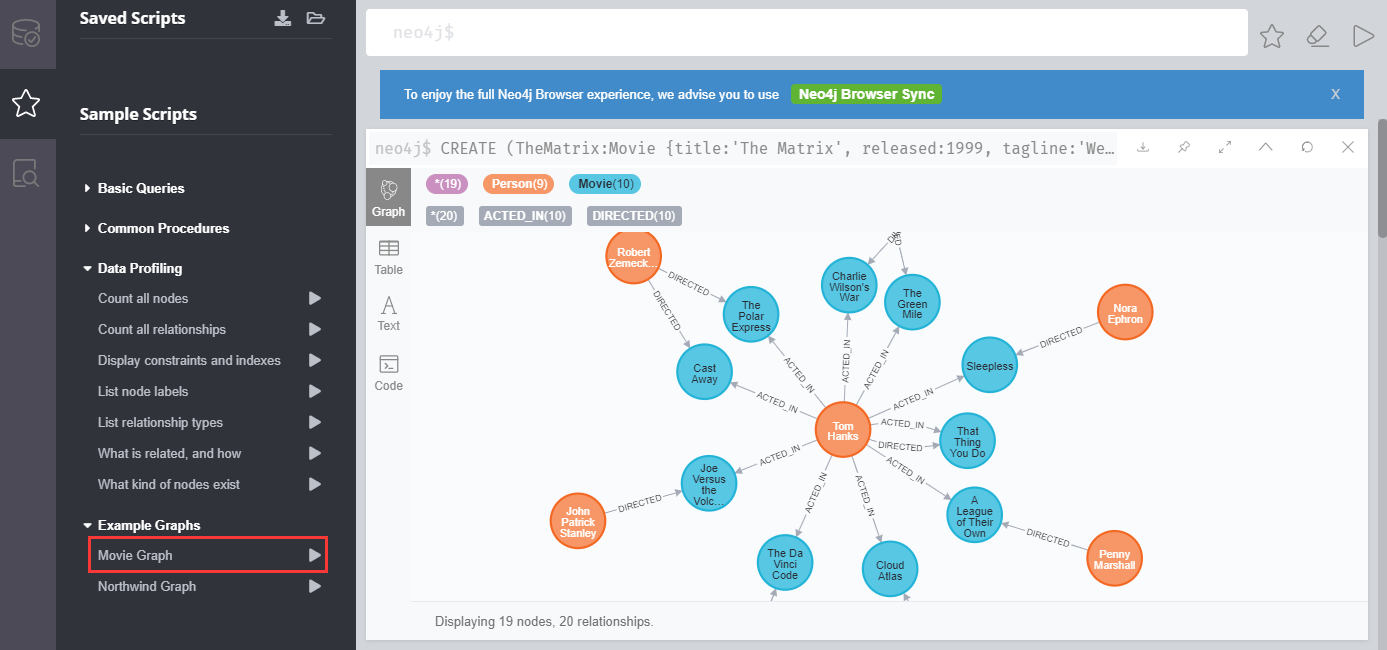
2. 打开:【Sample Scripts】>【Example Graphs】>【Movie Graph】,点击2/8页下的【Create】图标
3. 立即可见已经建立了关系的数据
4. 根据向导依次完成后续的页面中的范例
**自建数据并分析**[****](https://support.websoft9.com/docs/neo4j#%E8%87%AA%E5%BB%BA%E6%95%B0%E6%8D%AE%E5%B9%B6%E5%88%86%E6%9E%90)
1. 登录 Neo4j Browser,运行下面的命令录入三条节点数据
```
create (n:Person { name: 'Tom Hanks', born: 1956 }) return n;
create (n:Person { name: 'Robert Zemeckis', born: 1951 }) return n;
create (n:Movie { title: 'Forrest Gump', released: 1951 }) return n;
```

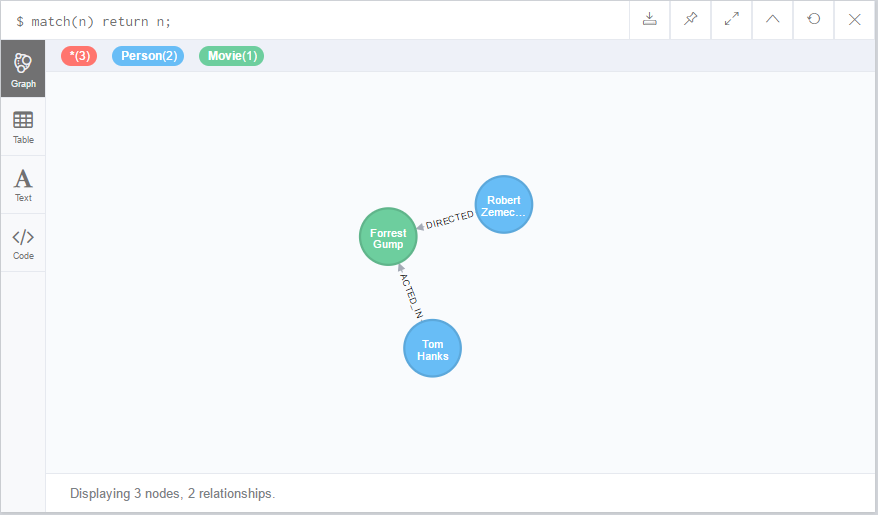
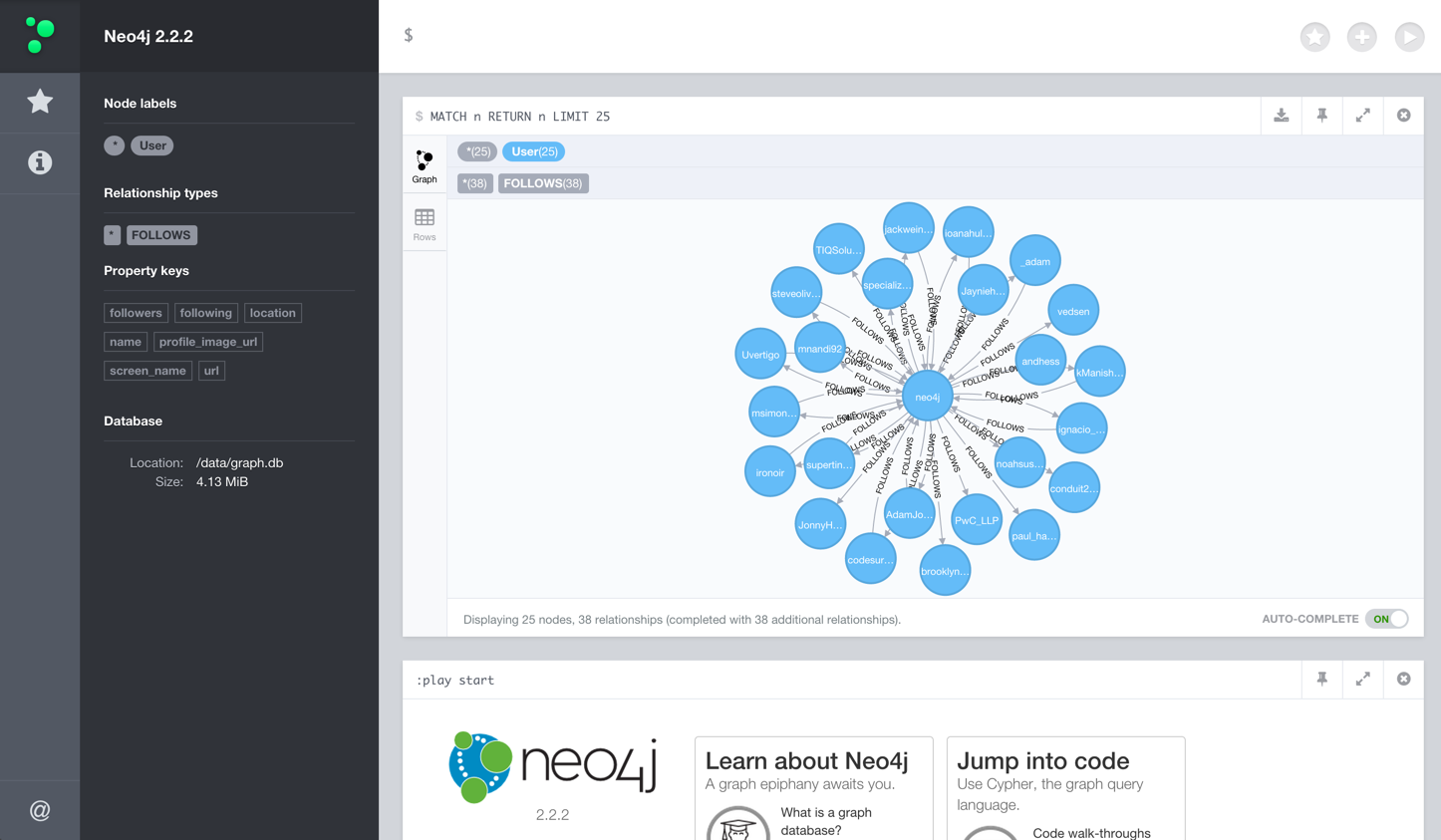
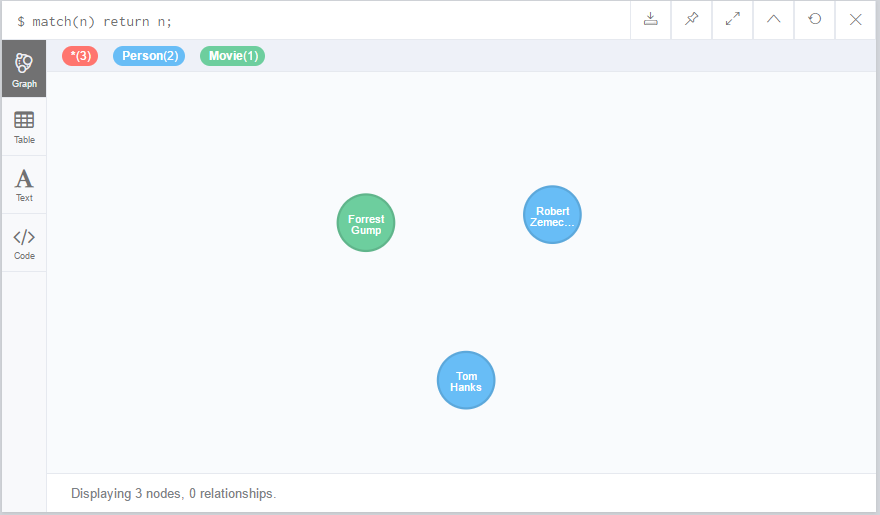
2. 运行查询所有节点数据的命令,便可以看到图形化展示出的数据
```
match(n) return n;
```
3. 接下来运行下面的命令,给节点创建关系
```
MATCH (a:Person),(b:Movie)
WHERE a.name = 'Robert Zemeckis' AND b.title = 'Forrest Gump'
CREATE (a)-[r:DIRECTED]->(b)
RETURN r;
```
4. 再次运行查询节点数据的命令 `match(n) return n;`
**导入数据进行分析**[****](https://support.websoft9.com/docs/neo4j#%E5%AF%BC%E5%85%A5%E6%95%B0%E6%8D%AE%E8%BF%9B%E8%A1%8C%E5%88%86%E6%9E%90)
参考:KGData 行业图谱数据
### Neo4j 常用操作[](https://support.websoft9.com/docs/neo4j#neo4j-%E5%B8%B8%E7%94%A8%E6%93%8D%E4%BD%9C)
#### 开启远程访问[](https://support.websoft9.com/docs/neo4j#remote)
1. Neo4j 所在的服务器的安全组,需开启 7687 端口
2. 确保Neo4j 配置文件 中没有限制外网IP访问(默认 0.0.0.0 表示允许)
```
# With default configuration Neo4j only accepts local connections.
# To accept non-local connections, uncomment this line:
dbms.default_listen_address=0.0.0.0
```
#### 用户管理[](https://support.websoft9.com/docs/neo4j#%E7%94%A8%E6%88%B7%E7%AE%A1%E7%90%86)
Neo4j 提供了详细的用户管理和角色管理功能(仅企业版支持)
```
# 显示所有用户
SHOW USERS;
CALL dbms.security.listUsers();
# 创建新用户,第三个参数表示 requridchangepassword
CALL dbms.security.createUser('username','password',false);
# 删除用户
CALL dbms.security.deleteUser('username');
```
详情参考官网文档:[User and role management](https://neo4j.com/docs/cypher-manual/current/administration/security/users-and-roles/#administration-security-users)
#### 图形化工具[](https://support.websoft9.com/docs/neo4j#%E5%9B%BE%E5%BD%A2%E5%8C%96%E5%B7%A5%E5%85%B7)
Neo4j 提供了多种图形化工具,有基于 Web 的版本,也有支持 Windows, Linux, macOS 等桌面版本。
在使用图形化工具之前,请确保开启了远程访问。
**Neo4j Browser**[****](https://support.websoft9.com/docs/neo4j#browser)
Neo4j Browser 是开发人员与图形进行交互的工具。它是Neo4j数据库的企业版和社区版的默认界面。
1. 本地浏览器访问:** 或 **, 访问 Neo4j Browser
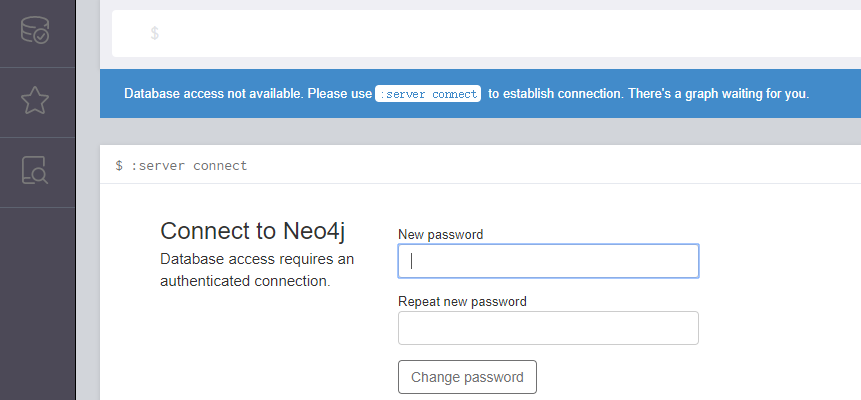
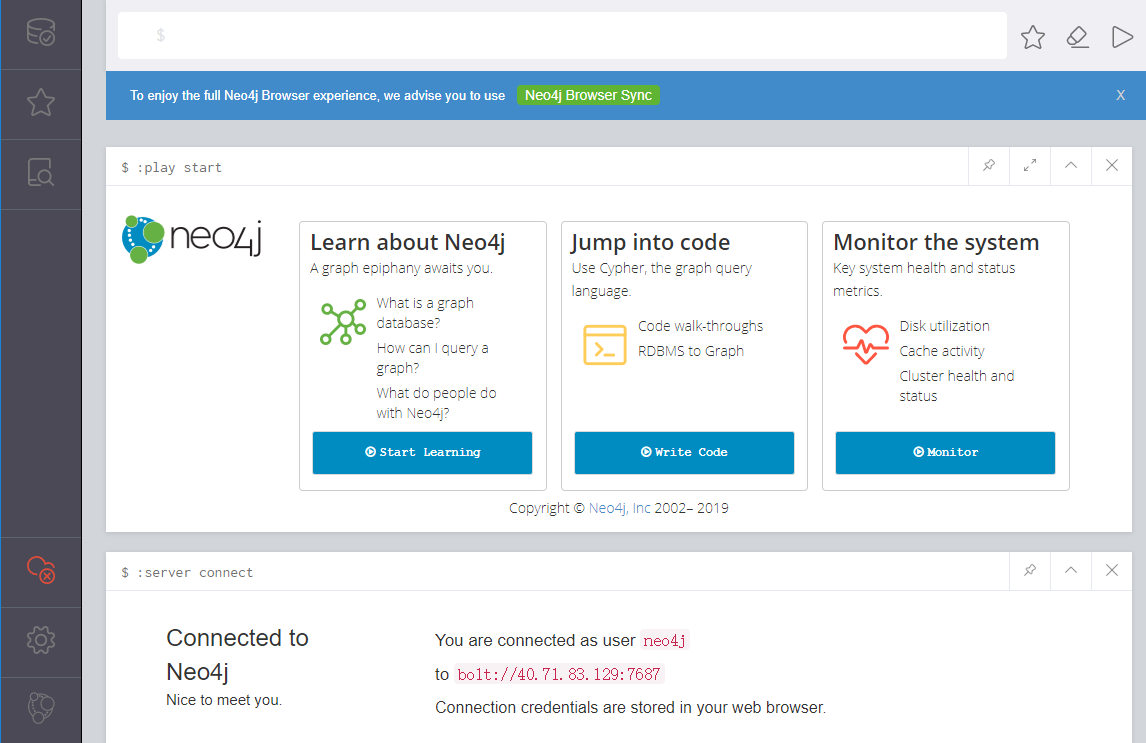
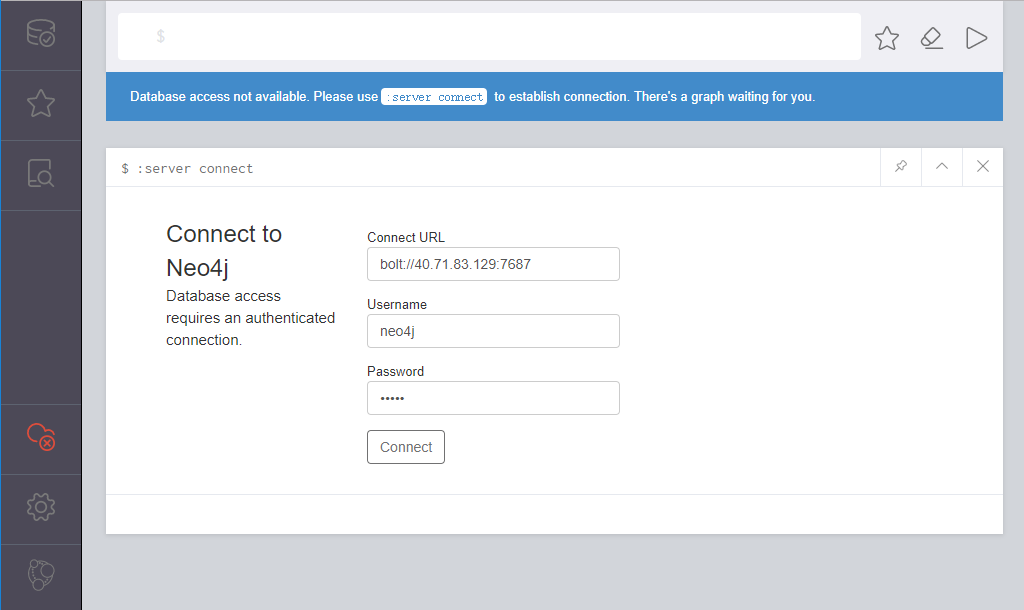
2. 选择【bolt://】的URL模式,输入用户名和密码,可能还需提示立即修改密码
> Pick neo4j:// for a routed connection, bolt:// for a direct connection to a DBMS. 选择 bolt:// 速度更快
3. 系统登录到控制台,初始化安装完成
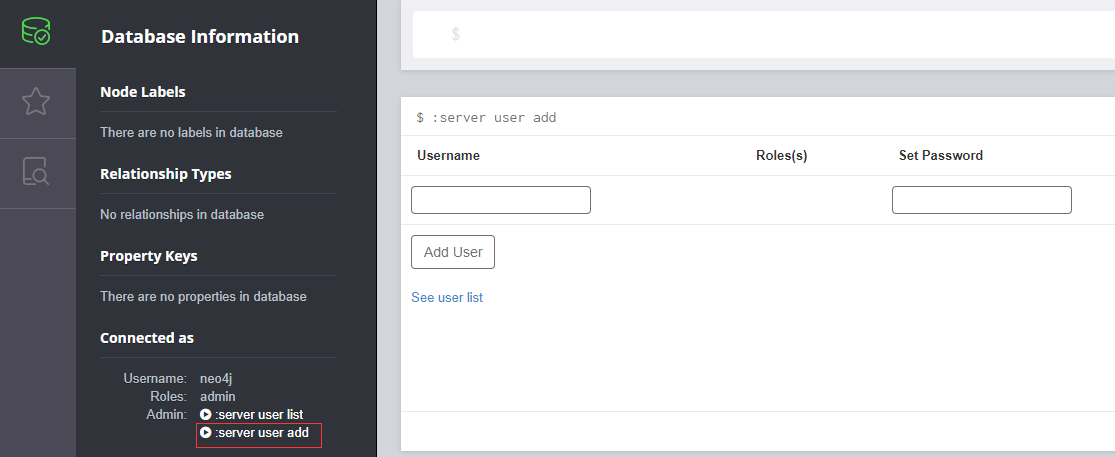
4. 通过:【Database Information】>【server user add】 增加新用户
5. 通过:【Cloud Services】>【Clear local data】 退出 Neo4j Browser 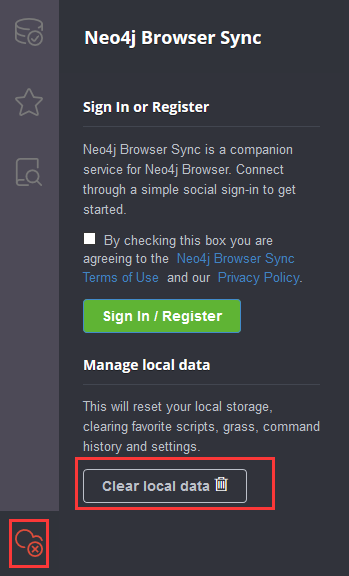
**Neo4j Desktop**[****](https://support.websoft9.com/docs/neo4j#desktop)
Neo4j Desktop 是开发人员使用本地Neo4j数据库的便捷方式。
1. 下载
2. 双击安装至完成,然后到 Neo4j 官网上注册,获取一个秘钥
3. 激活 Neo4j Desktop
4. 连接到远程 Neo4j 数据库,开始使用
**Neo4j Bloom**[****](https://support.websoft9.com/docs/neo4j#neo4j-bloom)
探索和可视化图形数据,这是一个付费的工具。
#### 重置密码[](https://support.websoft9.com/docs/neo4j#%E9%87%8D%E7%BD%AE%E5%AF%86%E7%A0%81)
常用的 Neo4j 重置密码相关的操作主要有修改密码和找回密码两种类型:
**修改密码**[****](https://support.websoft9.com/docs/neo4j#%E4%BF%AE%E6%94%B9%E5%AF%86%E7%A0%81)
修改密码只需登录服务器后运行一条命令即可:
下面的示例是将旧密码`neo4j`更改为新密码`neo4j123`:
```
echo "
ALTER CURRENT USER SET PASSWORD FROM 'neo4j' TO 'neo4j123';
" | cypher-shell -u neo4j -p neo4j -d system
```
**找回密码**[****](https://support.websoft9.com/docs/neo4j#%E6%89%BE%E5%9B%9E%E5%AF%86%E7%A0%81)
如果用户忘记了密码,通过配置文件临时去掉验证,然后设置密码,再复原的方法找回密码:
1. 停止 Neo4j
```
sudo systemctl stop neo4j
```
2. 修改 Neo4j 的配置文件,将`#dbms.security.auth_enabled=false` 改成
```
dbms.security.auth_enabled=false
```
3. 重新启动 Neo4j 服务后,开始修改密码
```
sudo systemctl start neo4j
cypher-shell -d system
neo@system> ALTER USER neo4j SET PASSWORD 'mynewpass';
neo@system> :exit
```
4. 复原配置文件
5. 重启 Neo4j 服务
以上方案来自官方文档:[Password and user recovery](https://neo4j.com/docs/operations-manual/current/configuration/password-and-user-recovery/)
### Neo4j 参数[](https://support.websoft9.com/docs/neo4j#neo4j-%E5%8F%82%E6%95%B0)
Neo4j 应用中包含 Nginx, Neo4j-browser 等组件,可通过 **通用参数表** 查看路径、服务、端口等参数。
下面仅列出 Neo4j 本身的参数:
#### 路径[](https://support.websoft9.com/docs/neo4j#path)
运行 `neo4j console` 命令查看安装相关的路径:
Neo4j 程序路径:*/var/lib/neo4j*\
Neo4j 配置文件路径:*/etc/neo4j/neo4j.conf*\
Neo4j 日志路径:*/var/log/neo4j*\
Neo4j 插件路径:*/var/lib/neo4j/plugins*\
Neo4j 数据路径:*/var/lib/neo4j/data*\
Neo4j 证书路径:*/var/lib/neo4j/certificates*\
Neo4j 启动路径:*/var/run/neo4j*
> 更多安装路径请查看 *neo4j.conf* 文件,配置文件设置参考[此处](https://neo4j.com/docs/operations-manual/current/configuration)
#### 端口[](https://support.websoft9.com/docs/neo4j#%E7%AB%AF%E5%8F%A3)
| 端口号 | 用途 | 必要性 |
| ---- | --------------------------------- | --- |
| 7687 | Neo4j Browser 远程连接 Neo4j database | 可选 |
更多的端口:[Port on Configuration file](https://neo4j.com/docs/operations-manual/current/configuration/ports/)
#### 版本[](https://support.websoft9.com/docs/neo4j#%E7%89%88%E6%9C%AC)
```
neo4j-admin -V
neo4j version
```
#### 服务[](https://support.websoft9.com/docs/neo4j#%E6%9C%8D%E5%8A%A1)
```
sudo systemctl start | stop | restart | status neo4j
```
#### 命令行[](https://support.websoft9.com/docs/neo4j#%E5%91%BD%E4%BB%A4%E8%A1%8C)
Neo4j 通过了一系列的命令行工具,用于管理服务、导入数据、分析数据,详情参考:[Neo4j Tools](https://neo4j.com/docs/operations-manual/current/tools/)
**Cypher Shell**[****](https://support.websoft9.com/docs/neo4j#cypher-shell)
Neo4j 提供了默认的命令行工具[Cypher Shell](https://neo4j.com/docs/operations-manual/current/tools/cypher-shell/),Cypher Shell用于运行查询和执行管理任务。它通过加密的二进制协议Bolt进行通信。
```
root@neo4j-test:~# cypher-shell
username: neo4j
password: *****
Connected to Neo4j 3.5.14 at bolt://localhost:7687 as user neo4j.
Type :help for a list of available commands or :exit to exit the shell.
Note that Cypher queries must end with a semicolon.
neo4j>
```
**neo4j-admin**[****](https://support.websoft9.com/docs/neo4j#neo4j-admin)
[Neo4j Admin](https://neo4j.com/docs/operations-manual/current/tools/neo4j-admin/) is the primary tool for managing your Neo4j instance. It is a command-line tool that is installed as part of the product and can be executed with a number of commands. Some of the commands are described in more detail in separate sections.
```
$ neo4j-admin help
Usage: neo4j-admin [-hV] [COMMAND]
Neo4j database administration tool.
-h, --help Show this help message and exit.
-V, --version Print version information and exit.
Commands:
help Displays help information about the specified command
memrec Print Neo4j heap and pagecache memory settings recommendations.
dump Dump a database into a single-file archive.
store-info Print information about a Neo4j database store.
report Produces a zip/tar of the most common information needed for remote assessments.
load Load a database from an archive created with the dump command.
check-consistency Check the consistency of a database.
import Import a collection of CSV files.
set-default-admin Sets the default admin user.
This user will be granted the admin role on startup if the system has no roles.
set-initial-password Sets the initial password of the initial admin user ('neo4j'). And removes the requirement to
change password on first login.
```
**neo4j**[****](https://support.websoft9.com/docs/neo4j#neo4j)
```
$neo4j -h
Usage: neo4j { console | start | stop | restart | status | version }
```
#### API[](https://support.websoft9.com/docs/neo4j#api)
[The Neo4j REST API Documentation](https://neo4j.com/docs/rest-docs/current/)
---
# Agent Instructions: Querying This Documentation
If you need additional information that is not directly available in this page, you can query the documentation dynamically by asking a question.
Perform an HTTP GET request on the current page URL with the `ask` query parameter:
```
GET https://docs.imdcinsights.com/ying-yong-zhong-xin/yun-shu-ju-ku/neo4j-kuai-su-ru-men.md?ask=
```
The question should be specific, self-contained, and written in natural language.
The response will contain a direct answer to the question and relevant excerpts and sources from the documentation.
Use this mechanism when the answer is not explicitly present in the current page, you need clarification or additional context, or you want to retrieve related documentation sections.